Residents slam New York City Mayor Zohran Mamdani over proposed property tax hike


New York City Mayor Zohran Mamdani called on the state to raise taxes on corporations and the wealthy to help deal with the city’s budget deficit on Tuesday, warning that the alternative would be for the city to raise property taxes.
Some New York City residents say Mayor Zohran Mamdani is reneging on his campaign promises for affordable housing by floating potential property tax increases to balance the city’s budget.
In presenting the first budget for the 2027 fiscal year, Mamdani said property tax increases would be a “last resort” if Albany did not cooperate with him in raising taxes on the wealthy.
“I’m not planning to move. It’s my home. I’m not,” Vivian Campbell, who bought her two-story home in Cambria Heights, Queens, in the 1990s, reportedly told WABC.
The outlet reported that the retiree earns a fixed income and recently spent about $35,000 on a new patio and roof.
“He lied,” Campbell said, referring to the mayor’s affordable housing messages on the campaign trail. “It’s obvious.”
SUPERIOR RENTAL AND AIRCRAFT SPECIALISTS
New York City Mayor Zohran Mamdani during a Bloomberg Television interview at City Hall in New York on Thursday, Jan. 29, 2026. (Michael Nagle/Bloomberg via Getty Images/Getty Images)
Another man, identified by the company as home owner James Johnson, said, “Mayor Zohran Mamdani, you are out of your god—- mind.”
“He’s only giving two options. He’s saying if we don’t tax the rich I should raise property taxes,” Johnson added. “We are not a pawn in Southeast Queens. We are not part of your bargaining chips.”
“To the city, with all due respect, with every campaign speech and every debate where you’ve spoken, we’ve opened our ears to listen,” another homeowner, Pierry Benjamin, told WABC. “Now today, accept the words that resonate with us now, do your job as mayor and leave our taxes out.”
Fox News Digital has reached out to the mayor’s press office for comment.
Mamdani, a self-proclaimed Democratic Socialist, called on the Empire State to raise “taxes on the wealthiest New Yorkers and the most profitable corporations” to address the Big Apple’s budget deficit.
HUNDREDS OF THOUSANDS IN NYC ARE REPORTEDLY JOINED IN AMAZON’S LAYOFF PLAN
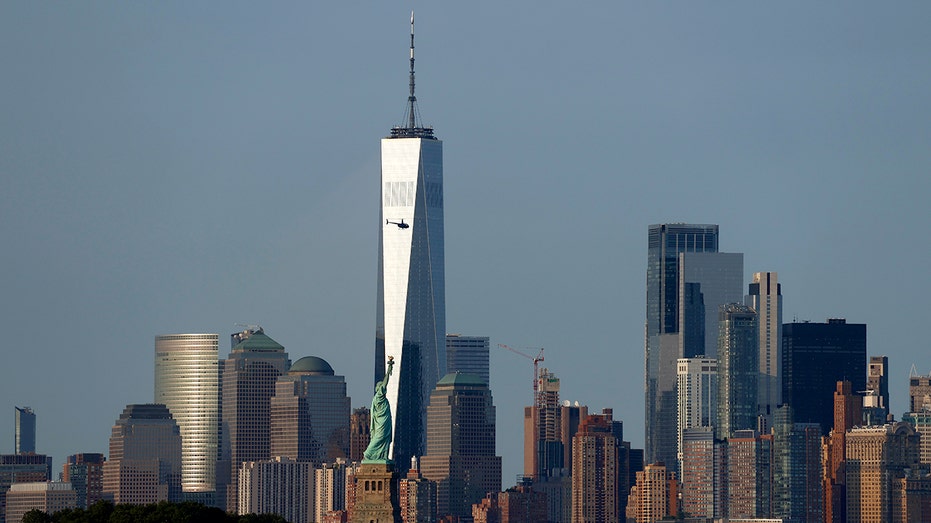
A helicopter flies over One World Trade Center behind the Declaration of Independence as the sun sets in New York City on Aug. 7, 2025, as seen in Jersey City, NJ. (Gary Hershorn/Getty Images/Getty Images)
But he warned that one way to get a balanced budget, which is needed, would be to raise property taxes and dip into the city’s reserves, a situation he described as “a last resort.”
“This would be a tax on working and middle-class New Yorkers, who have an income of $122,000,” he said, regarding the prospect of a property tax increase.
MAMDANI PROPOSES TO INCREASE NYC PROPERTY TAXES IF THE STATE DOES NOT ALLOW TAX INCREASE FOR THE RICH.

New York City Mayor Zohran Mamdani speaks at a press conference at Deno’s Wonder Wheel at Coney Island in Brooklyn on Feb. 15, 2026. (Kyle Mazza/Anadolu via Getty Images/Getty Images)
GET FOX BUSINESS ON THE GO BY CLICKING HERE
The city council should have a bright city budget, according to New York Times.




