
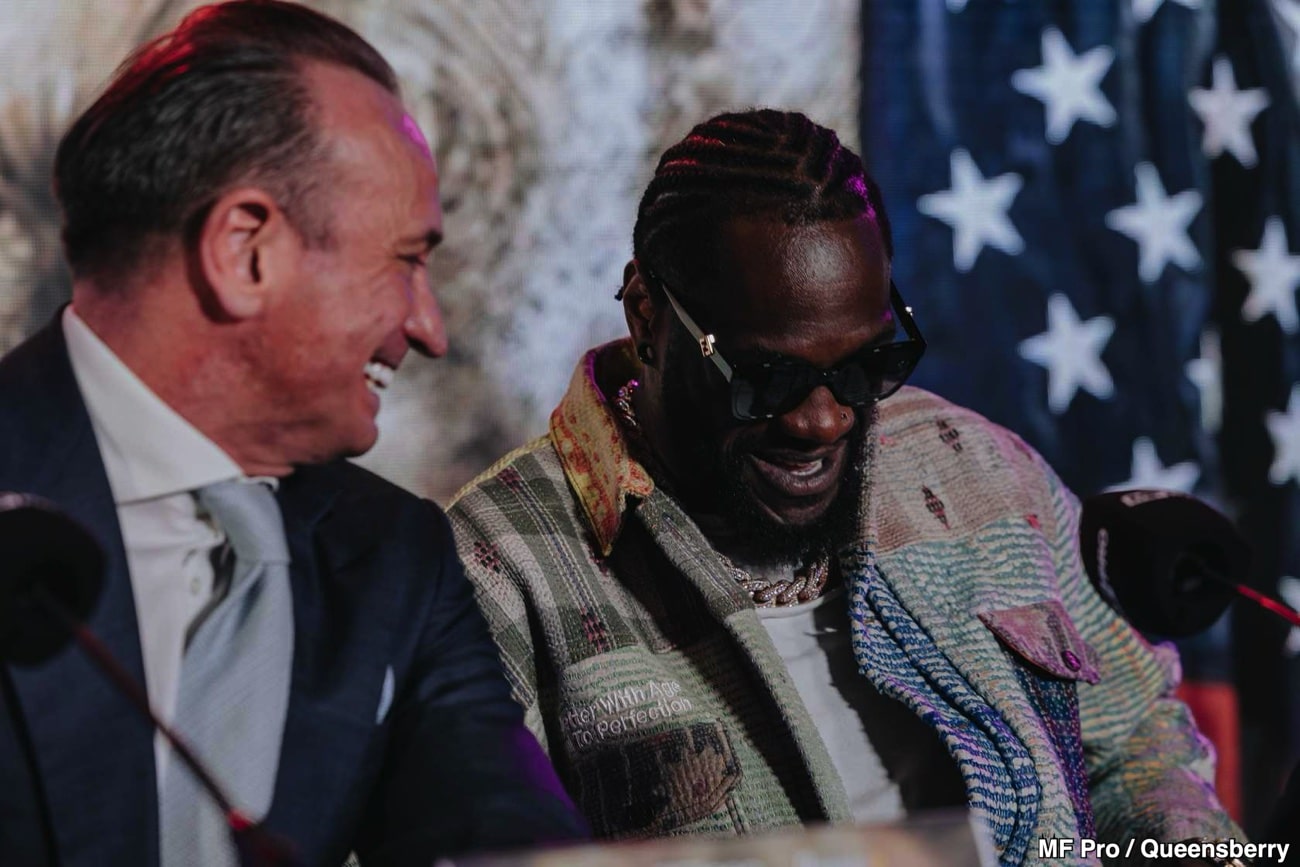

Wilder said in a lengthy interview with Brian Custer that he had suffered lasting psychological effects from his previous fight with Tyson Fury, saying, “I have PTSD from past situations but I’ve seen someone with that.”
The reception was unusually directed at a former heavyweight champion whose reputation is built on fear and emotional conviction. He said he even sought help, but his comments quickly returned to Fury, the opponent who defeated him twice and ended his title.
The Fury feud remains central to Wilder’s return
The reference was unusual. Wilder launched an ongoing attack on Fury’s character, accusing him of cheating and directing anger at his supporters. The emotional intensity of those comments revealed that Fury remains at the forefront of Wilder’s thinking, as he prepares to restart his career against new opponents. Fully advanced fighters rarely revisit old defeats with that level of urgency years later.
Wilder’s career came to a halt after the Fury trilogy ended in October 2021, when he was stopped in the 11th round of their third fight. That defeat followed a seventh-round knockout in their rematch, which has already cost him the WBC heavyweight title, which he has successfully defended ten times. He returned in 2022 defeating Robert Helenius, but his career declined over time, and he no longer holds the same position of authority he once held in the division.
His comments during the interview showed a fighter trying to reassert himself while carrying the weight of that loss. Wilder has described himself as important to the future of boxing, saying the sport is incomplete without him, but his words were directed back at Fury rather than outlining specific steps to revive his standing.
Seeing a fighter who built his entire career on being the “Bronze Bomber,” this unstoppable, intimidating force, admit to having PTSD is a huge change in his community.
Although he has yet to openly suspect a single fight, his “reputation” is supported by his recent record.
The Post-Fury Slump
Since that brutal trilogy finale in 2021, he’s really struggled to find the same rhythm:
- Robert Helenius (2022): Looked like vintage Wilder here with a first-round KO, but that was a quick burst that didn’t require sustained mental focus.
- Joseph Parker (2023): This is where the “shadow” really came from. He looked hesitant and helpless, losing the unanimous decision.
- Zhilei Zhang (2024): Another tough night where he looked shy before being stopped in the fifth round.
- Tyrrell Herndon (2025): Picked up a TKO win here, but he was against a lower caliber of opposition than he’s used to.
The theory is that Fury’s battles are the cause, which makes sense given the way he talks. Even in recent interviews where he talks about seeking help from a sports psychologist, his conversation almost always goes back to Fury, the betrayal, and the emotional baggage from that time.
Deontay recently noted that the “betrayal” from those close to him at the time affected him more than the actual loss, suggesting that the “PTSD of past situations” may be as much about the people around him as the punches he took. At 40, fighting at that level of mental weight is a tall order, especially in a division that has gone through guys like Usyk.
Wilder, now 40, remains one of the hardest punchers in heavyweight history, and that alone ensures he will continue to draw attention. Knockout’s power doesn’t expire in an instant, and gives him a way to get back into meaningful fights if he stays busy. But his interview made it clear that his return is not just to chase new opponents. It’s about dealing with the chapter that changed his career.


