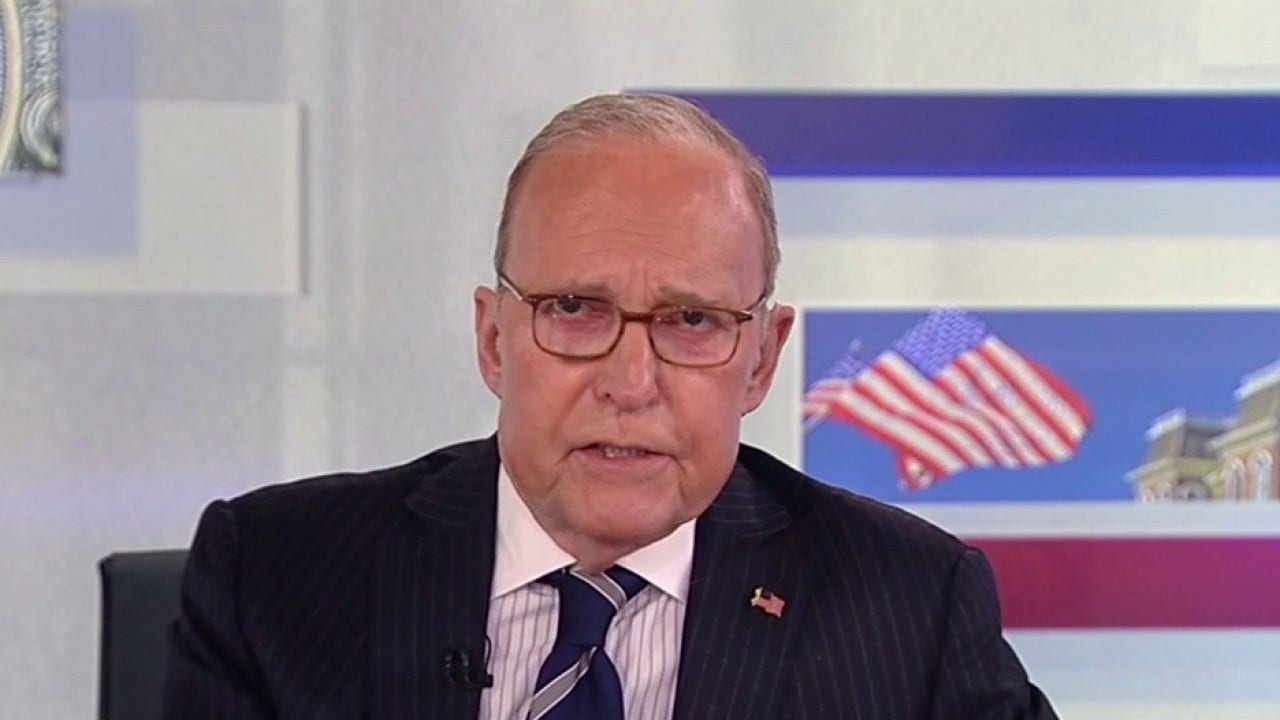
Warsh is leading his first press conference on interest rates after becoming chairman of the federal reserve.
This is a developing story regarding the June 2026 FOMC interest rate decision and will be updated with more details.
I The Federal Reserve He announced on Wednesday that he would hold interest rates steady due to concerns about rising inflation amid the Iran war, as Fed Chairman Kevin Warsh’s tenure at the central bank begins in earnest.
Fed policymakers voted to leave the benchmark federal funds rate unchanged at the current range of 3.5% to 3.75%. The move follows the central bank’s decision to hold interest rates unchanged in January, March and April following three consecutive reductions based on 25 in September, October and December to close last year.
The Federal Open Market Committee (FOMC), the central bank’s panel responsible for monetary policy moves, voted 12-0 to leave interest rates unchanged. Policymakers noted in the FOMC statement that inflation remains higher than the central bank’s 2% target, which “partially reflects supply shocks that have driven up prices in some sectors, including energy.”
They also noted that job gains are linked to the number of workers, while reiterating support for the dual mandate of price stability and high employment. Policymakers added, “Economic activity is growing at a steady pace despite heightened uncertainty caused, in part, by the Middle East conflict.”
The FOMC’s June monetary policy meeting was the first chaired by Fed Chairman Kevin Warsh. (Graeme Sloan/Bloomberg via Getty Images)
INFLATION HURTS AMERICAN CONSUMERS AND THE FED’S NEWEST REPORT SHOWS IT WILL GET WORSE.
The FOMC also released a summary of economic projections, also known as a dot plot, which showed that nine of the 18 members plan to raise interest rates before the end of 2026, with six predicting a 25-point increase.
They see PCE inflation at 3.6% by the end of the year, up from 2.7% in March, and the unemployment rate at 4.3%, slightly lower than the previous estimate of 4.4%. They also see economic growth slowing, with projections showing real GDP rising 2.2% by the end of the year – down from a forecast of 2.4% in March.
Fed Chairman Warsh addressed the media in his first post-meeting press conference on behalf of the FOMC. Warsh’s predecessor, Jerome Powell, is still a member of the Fed’s Board of Governors and a voting member of the FOMC.
“We note that inflation has been running well ahead of the Fed’s long-term stated inflation goal of 2%. This has been going on for more than five years. Persistently high rates are a burden for the American people, but the past need not be precedent,” Warsh said.
“I am happy to report that the members of the FOMC are clear and unanimous – this committee will deliver price stability,” he added.
HOW DOES KEVIN WARSH SEE THE CENTRAL BANKING’S MONEY FLEXIBILITY GOAL?
Warsh also noted that the FOMC issued a significantly shorter statement than in the past, which he said removed outdated language and delivered a more forward-looking, data-focused statement and the committee’s goals.
He also explained plans to build five forces to review aspects of the Fed’s monetary policy, communications, data sources, productivity and the labor market, and the causes of inflation. Warsh was asked about the timeline for those projects, and said he hopes most will be completed this fall or by the end of the year.
Warsh explained that the inflation team will consider the drivers of inflation and how it is measured, although it will not consider changes to the Fed’s 2% target at this time.
“I see no reason, until we have reaffirmed our commitment and our ability to achieve the 2% inflation target, to look at that again. So that will be outside of what we are doing,” he said.