NEWNow you can listen to Fox News articles!
Robots have become very good at walking fast, repeating steps and doing tasks that you and I can do. But ask a robot to pick up something soft, oddly shaped or slightly different from the last thing it handled, and things can quickly get a little complicated.
This is where the new partnership between ABB Robotics and PSYONIC comes in. ABB Robotics is working with PSYONIC, a California bionics company, to test how real-world gesture and movement data from human prosthetic use can help train robotic arms.
In other words, the same kind of bionic hand that helps a person grasp a tool, pick up a fragile object or adjust pressure in real time can help teach robots how to do those tasks better.
Sign up for my FREE CyberGuy report
- Get my best tech tips, emergency security alerts and exclusive deals delivered straight to your inbox.
- For simple, real-world ways to spot scams early and stay protected, visit CyberGuy.com – trusted by the millions who watch CyberGuy on TV every day.
- Plus, you’ll get instant access to my Free Scam Survival Guide when you join.
SOFT ROBOTIC ARMBAND GIVES USERS FREE HAND ENVIRONMENTAL CONTROL
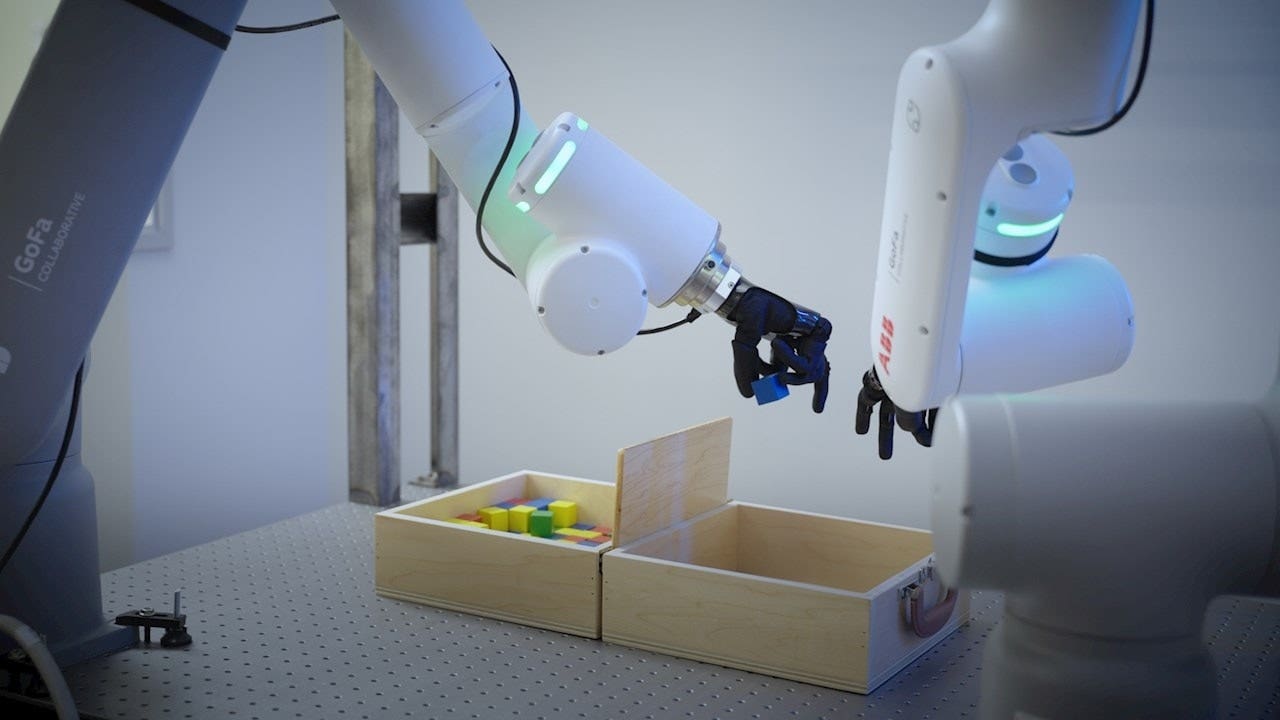
The PSYONIC Ability Hand can capture touch, motion and grip-force data in real-world robotic applications. (ABB Robotics)
How a bionic hand can teach a robot
The collaboration focuses on PSYONIC’s Ability Hand and ABB’s GoFa cobot. Ability Hand was originally designed for passive use. It has multi-functional fingers, pressure sensors, vibration feedback and flexible hardware to help it adapt to unusual situations. That combination is important because a person’s grip is not one fixed action. You hold a coffee cup differently than a screwdriver. You handle an egg differently than a phone. Most of us do that without thinking about it.
For robots, that natural adjustment is difficult. ABB and PSYONIC want to explore how movement, contact and grip-force data from Ability Hand can help train robots to handle fragile, uneven or unpredictable objects. ABB’s GoFa cobot brings the industrial side of the equation, providing the precision and repeatability needed to test those movements in a controlled manner. The result could be a robotic arm that learns from real human grip data, then applies that information to factory and warehouse operations.
Why is catching a robot such a difficult problem
Industrial robots can already lift, move, weld, sort and assemble at incredible speeds. However, many still struggle when work involves subtle touches. Imagine a robot picking up a delicate package, a medical component or a slow-moving part on a conveyor belt. Too much pressure can damage the item. Too little pressure can cause the robot to fall. A small change of angle can throw off the whole process.
A JOB-KILL ROBOT LEARNS ON THE JOB, AND COMES TO THE POOL
That’s why consistency and sophistication remain the biggest challenges in automation. ABB calls this a key part of Autonomous Versatile Robotics, or AVR, its vision for robots that can sense, think, move and manipulate objects with precision in changing environments.
Marc Segura, president of ABB Robotics, puts it this way: Human intelligence remains “one of the most difficult things to replicate in industrial-scale robots.” He said working with PSYONIC could help “close the long-standing gap” between human and robotic intelligence. That gap is where this technology can make a real difference.
What makes PSYONIC Ability Hand different
PSYONIC Ability Hand is designed to help people. It uses a myoelectric controller, touch sensor and compliant hardware in a lightweight design. Its sensors can detect pressure when holding, while vibration feedback can help communicate and interact with the user. That same ability to hear could be useful in robots.
AI Lets Disabled Man Control Robotic Arm With Disability
PSYONIC says Ability Hand can capture detailed data about movement, contact and grip strength. When that hand is used by humans in real-world situations, it can generate a more natural dataset than just a robot demonstration in a lab.
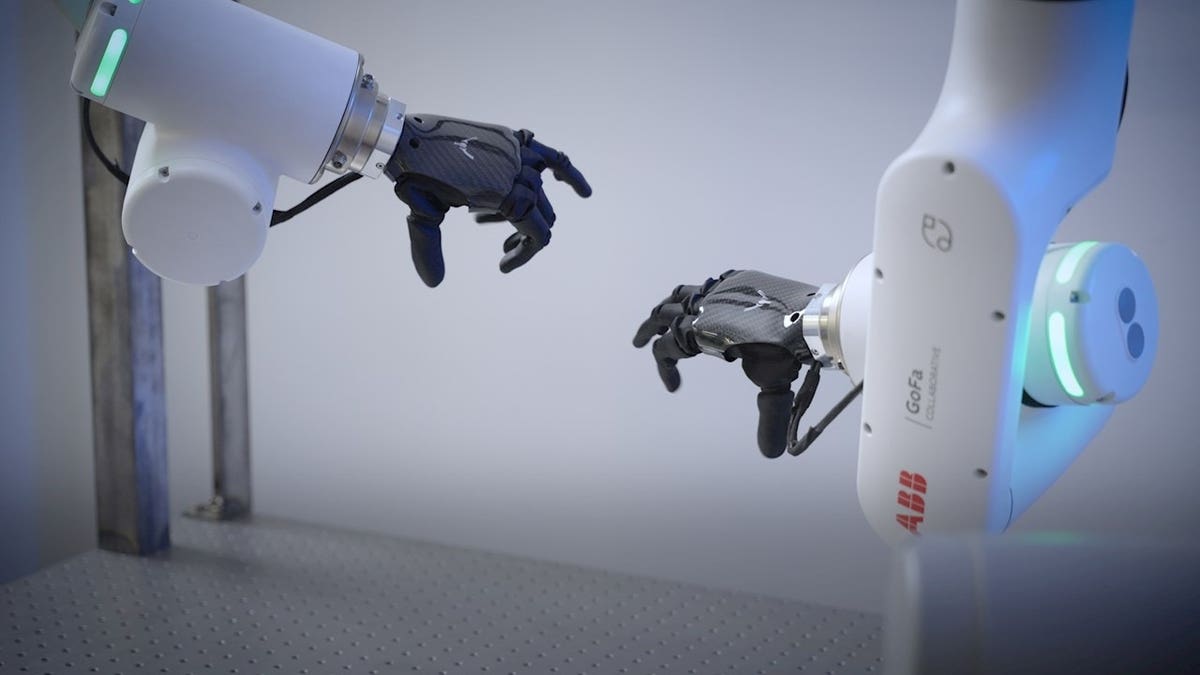
ABB’s GoFa cobot is being used to test how bionic hand data can help robots handle delicate and unusual objects. (ABB Robotics)
Dr. Aadeel Akhtar, founder and CEO of PSYONIC, called intelligent manipulation “a data challenge like a hardware challenge.” That line gets to the heart of this. Better robotic hands are essential. Yet the training data behind those hands may be what determines how useful they can be in real workplaces.
Where the bionic hand data can first appear
ABB and PSYONIC say the project could be applied across automotive, aerospace, packaging, materials and life sciences. That makes sense. These are industries where robots already play a major role, but where sensitive or flexible management can still slow things down. A robot that can better adjust its grip can help with fragile items, oddly shaped products, delicate packaging or repetitive tasks that are physically demanding.
HUMANOID ROBOTS FOR QUALITY ASSESSMENT AND AUTOMATED PLANT ASSEMBLY
The International Federation of Robotics has also identified advanced grip and digital integration as a way to reduce engineering time by 30%. That’s important for companies because automation is often delayed by setup, tuning and custom engineering. If haptic robotic hands can alleviate some of that work, companies could quickly roll out robots and use them in more flexible ways.
How touch-trained robots could change factory work
There is a positive side to this. Robots that handle repetitive or ergonomically challenging tasks can reduce strain on humans. That would mean that fewer workers are stuck doing the same painful movements all day. However, there is also a big labor question here. More skilled robots can take over tasks that once seemed too flexible to do for themselves. That could affect the way companies hire, train and provide work in the future.
A more practical version of this technology would support people instead of simply replacing them. For example, robots can handle re-handling while workers focus on supervision, quality control, machine setup and high-skilled work.
Watch CyberGuy Live replay: Turn Off Your Phone in 30 Minutes
Your phone holds your email, passwords, photos, banking apps and personal data. In this free CyberGuy Live game, Kurt the CyberGuy walks you step-by-step through easy phone security fixes that you can do at your own pace. You’ll learn how to improve your privacy settings, spot the latest phone scams, use trusted security tools and go with a simple checklist to stay protected. Watch the game and find our checklist here: CyberGuyLive.com
Kurt’s priority is taking
ABB Robotics and PSYONIC are taking a different approach to one of the toughest problems in robotics: touch. Instead of only training robots in the lab, they want to use real movement and grip data from the bionic hand that people are already using. That could help robots become better at delicate, flexible tasks that have previously been difficult to automate. It could also push industrial robots closer to working safely and efficiently around people in many areas. But the human side should not lose its joy. If robots are going to learn from human interactions, companies need to be clear about data usage, workplace impact and safety assessments.
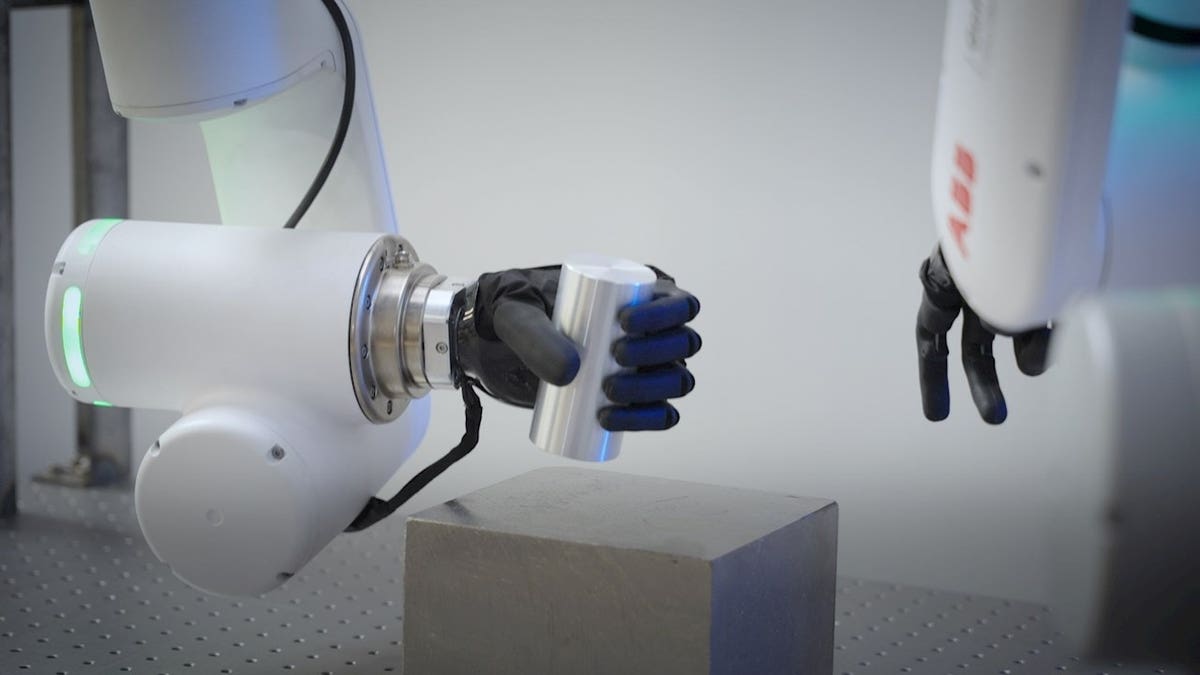
Collaboration can help robots become more useful in factories, warehouses and other workplaces where precise handling is important. (ABB Robotics)
Would you feel comfortable knowing a robot at work was trained using real human touch data? Let us know by writing to us at CyberGuy.com.
CLICK HERE TO DOWNLOAD THE FOX NEWS PROGRAM
Sign up for my FREE CyberGuy report
- Get my best tech tips, emergency security alerts and exclusive deals delivered straight to your inbox.
- For simple, real-world ways to spot scams early and stay protected, visit CyberGuy.com – trusted by the millions who watch CyberGuy on TV every day.
- Plus, you’ll get instant access to my Free Scam Survival Guide when you join.
Copyright 2026 CyberGuy.com. All rights reserved.