

His move to welterweight deepened expectations. He was widely considered the top fighter in the division long before he officially held the title. The war interrupted the works. The politics of boxing stopped others. Certain figures behind the curtain determined when opportunities arose and when they did not. Robinson endured that waiting period without sacrificing his independence, which was rare in an era when freedom was often punished.
The middleweight championship existed within a complex ecosystem. Tony Zale, Rocky Graziano, and Marcel Cerdan had traded titles in violent succession, and behind them stood the International Boxing Club of New York, an organization that operated with quiet authority and understanding influence. Frankie Carbo, known as “Mr. Gray,” represented that authority. Champions were inside his system, whether they would admit it or not.
Jake LaMotta understood the system as well as anyone. He had grown up in its lane and had given up to protect his own opportunity. His loss to Billy Fox in 1947, widely believed to have been staged, was the entry price. He paid us, and he ended up becoming the middleweight champion.
LaMotta’s rivalry with Robinson then produced five fights. Robinson had won most of them, but LaMotta’s power had cost him. Robinson’s only defeat came against him. LaMotta forced Robinson into a grueling trade that sapped his creativity late in the fights. Their rivalry contained a conflict that numbers alone could not explain.
Before their sixth meeting in Chicago in 1951, Robinson later said that Carbo approached him privately. The instruction was simple. Win the title, then repeat it. Robinson refused. He didn’t make a drama of rejection. He just left.
The battle itself carried the feeling of something ending rather than beginning. LaMotta is pushing forward, capitalizing on the body like he always does. Robinson responded with distance and repetition, his jab controlling the ring area. As the rounds piled up, LaMotta’s persistence paid off. His stubbornness allowed the punishment to continue.
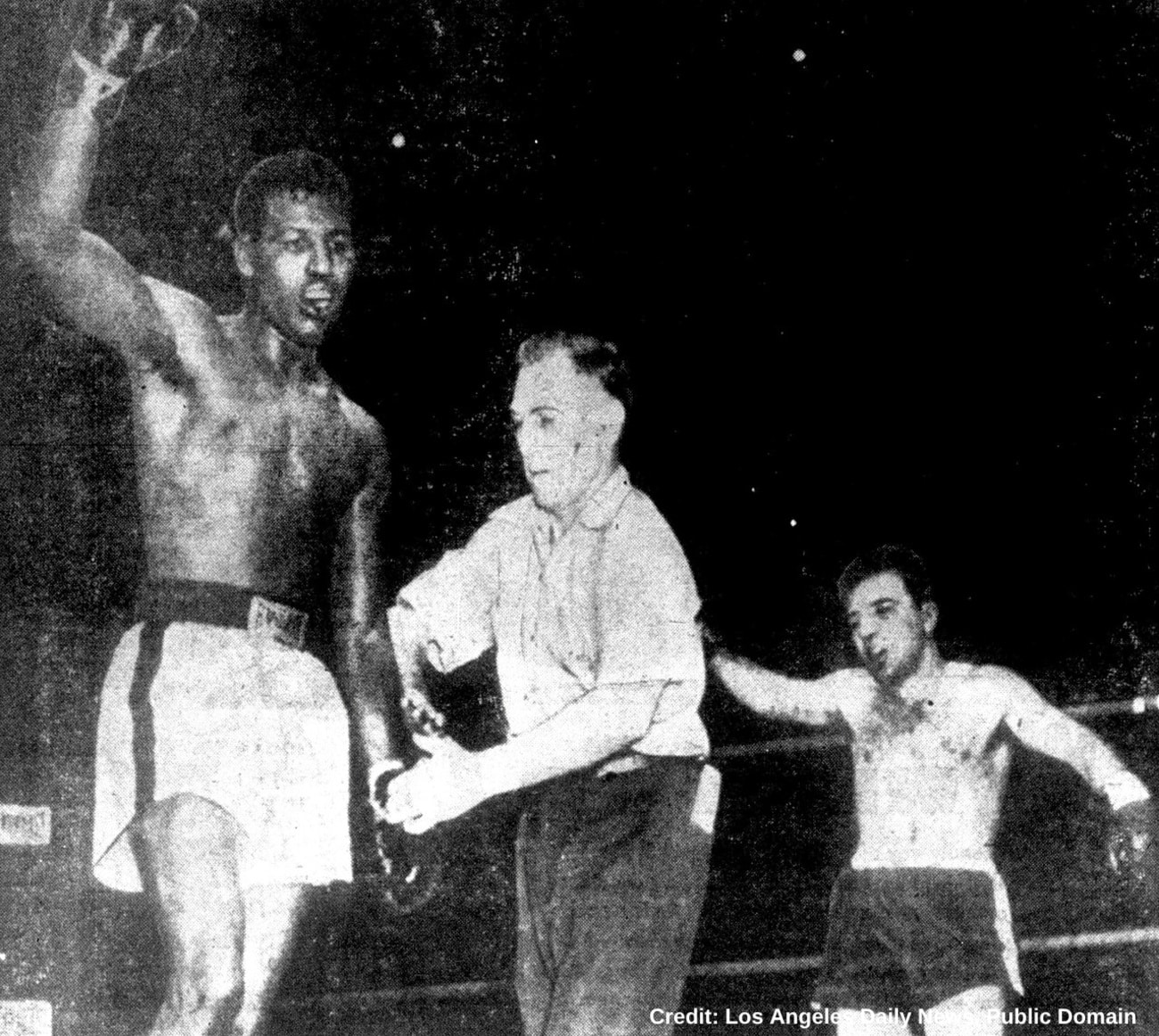
By the championship rounds, LaMotta had held his own in defeat. Robinson did not rush the end. He patiently applied pressure, only speeding up when the resistance had already begun to melt away. In the thirteenth round the referee intervened. LaMotta continued to stand, but standing no longer meant competition.

The victory changed Robinson’s position immediately. He vacated the welterweight title, which he let go of the division. He is the middleweight champion, who has reorganized another division around him. Light heavyweight suddenly became a sensation. Robinson had created a stir with his arrival.
His greatness did not announce itself at that time. It confirmed itself. Robinson didn’t expand on the thought of boxing. He changed it.


