
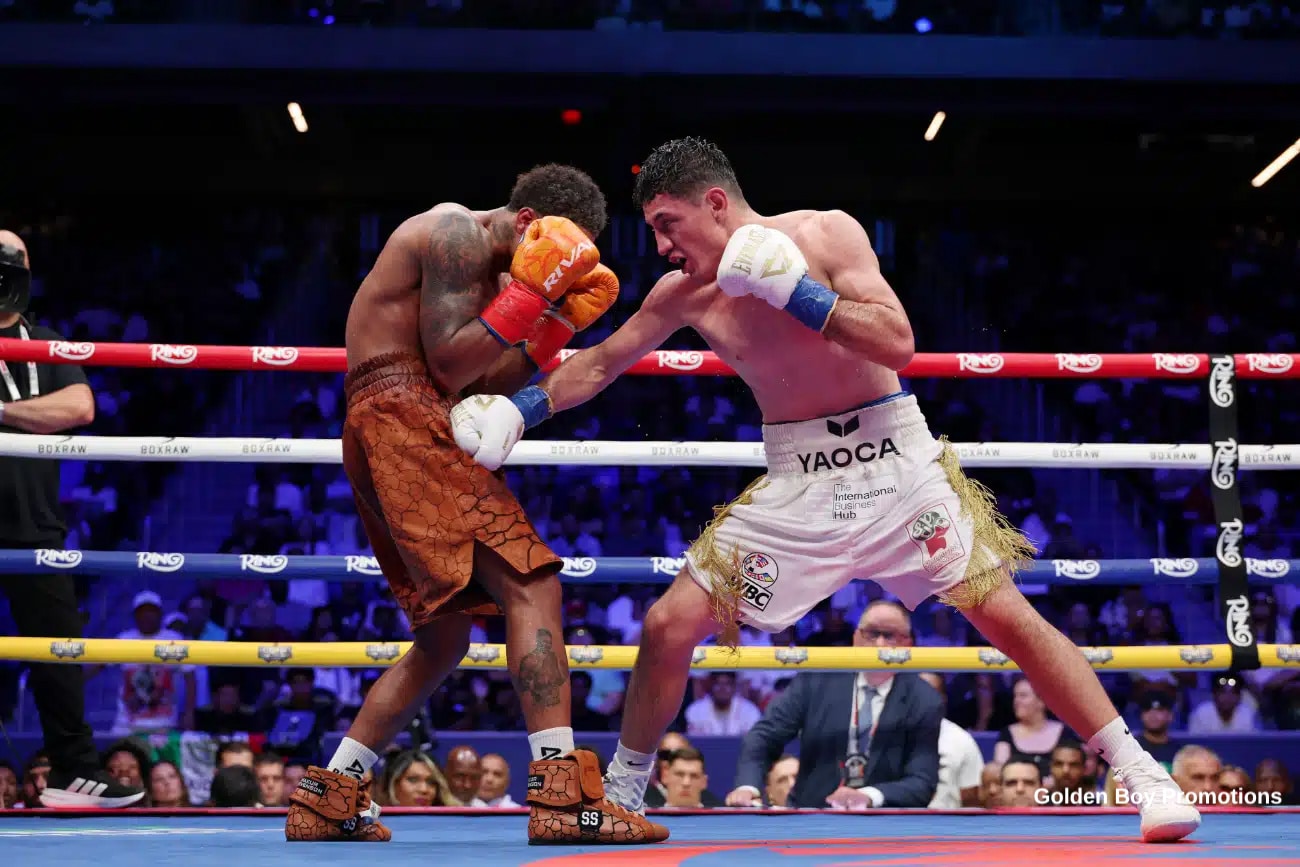

Example of Zepeda
He then named one example that fit the description: William Zepeda. That detail is important because Zepeda isn’t a projected opponent or a style Stevenson hopes to avoid. He’s a fighter Stevenson has already dominated for twelve rounds since last July, controlling speed, distance, and output without losing command of the fight.
In that sense, Stevenson describes the narrow range of risk that he takes seriously and explains why a more specific version has already been mentioned. Resistance, as he explains, only appears under certain conditions that he has experienced.
The Battle of Zepeda was once treated as a moment when Stevenson would have to face a career in progress. Zepeda’s punch volume, engine, and willingness to go against the odds created the expectation that Stevenson would eventually be forced into a free trade. The truth was calm. Stevenson controlled the tempo early, gave up space when it suited him, and reasserted control whenever Zepeda tried to accelerate. The output never disappeared, and the power gradually decreased.
“The most you’ll ever get is Zepeda. That was the best hope for resistance,” Shakur said on Cigar Talk. “Styles make fights. The style that would give me the most resistance is that of a guy who throws a million punches and doesn’t stop.”
That experience seems to have shaped Stevenson’s view of his limits in danger. When he says that the style that bothers him the most is that of continuous boxing, he also describes a situation where the pressure that has been going on cannot be changed. The key details here are grip, and the ability to limit risk without chasing dominance.
How Fighters Are Sorted
Stevenson describes a small set of situations in which opposition is shown, and those situations are difficult to reproduce when fighters reach the top of the sport. Fighters who throw frequently tend to absorb damage early in their careers. They are filtered out, slowed down, or carefully moved long before they reach the peak, and when they are matched in large battles, volume is often at stake. That pattern shows how modern boxing is built.
High pressure fighters want to tolerate risk on both sides. They take punishment, force trades, and rely on judges who reward continuous work instead of one-off sessions. Those features are rarely protected over time. Heavy instead are controlled specialists, selective shooters, and fighters who win rounds without expending too much energy or exposing themselves unnecessarily.
Stevenson belongs to that last group, and his work shows it. Against Lopez, he banked rounds, eliminated angles, and allowed the fight to be on terms that suited his discipline. The result was not great, but it was decisive, reinforcing the same pattern seen earlier in his work.
That play, coupled with his comments about Zepeda, points to a simple truth. Stevenson’s fights are not getting harder because the styles that would have confused him are becoming more and more rare at the top level.
This does not mean that Stevenson cannot be beaten. Boxing never works that way, and time, age, and condition eventually catch up with everyone. It suggests that the common question of who beats Shakur Stevenson is often asked without much attention to how the game produces opponents capable of sustaining the kind of pressure he describes.
If Stevenson’s assessment is accurate, the type of opponent needed to truly test him is unlikely to be perfect. And if one does, Stevenson has already shown that he can handle that problem without giving up control or driving out unnecessary risk.
That fact may disappoint fans looking for chaos. It explains why Stevenson keeps winning the same way, and why the list of credible threats keeps shrinking rather than growing.


